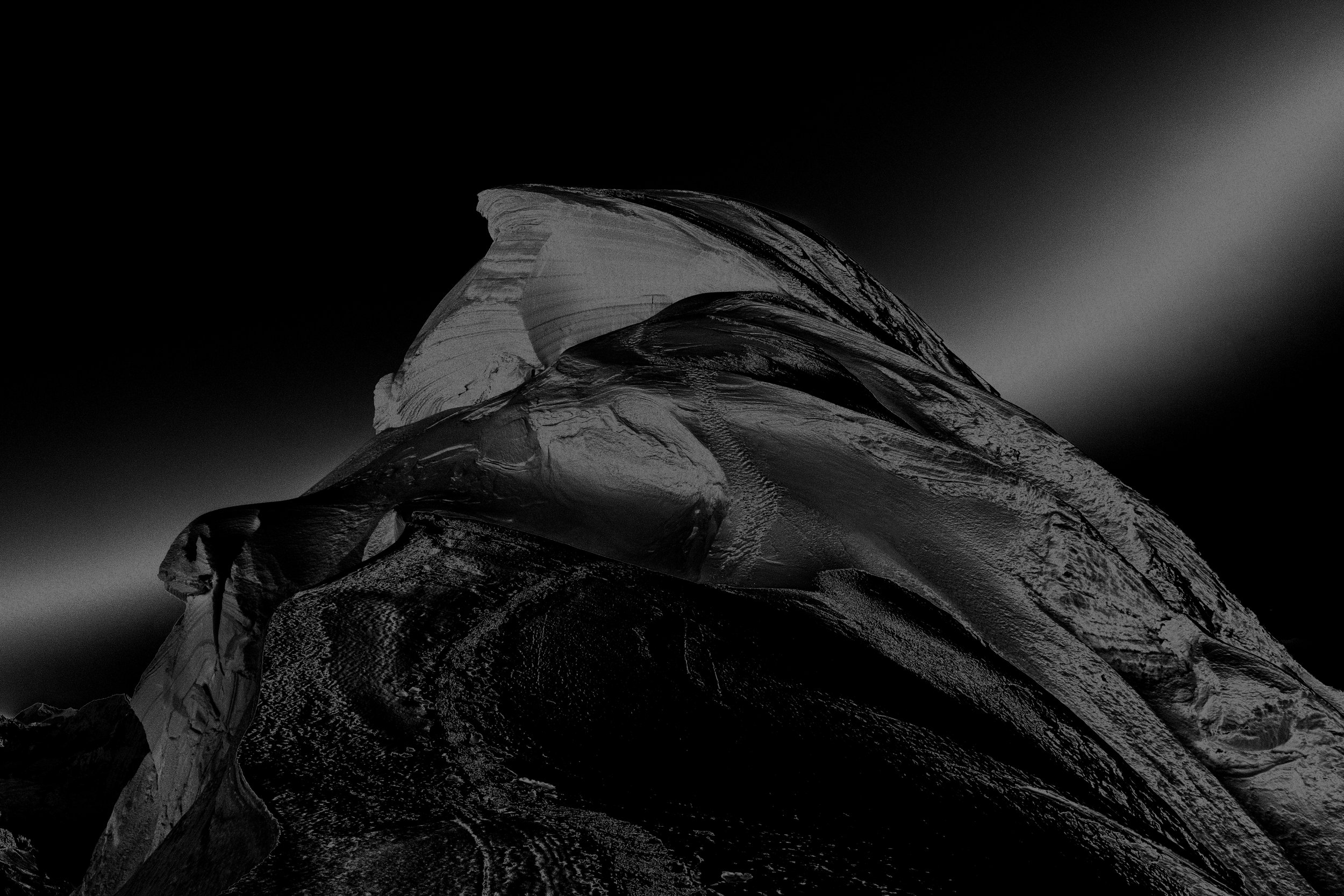
Chopicalqui, Peru. 6,355m.
Every ecosystem around the world are facing the consequences of climate change. However, one of the most alarming signs of the severity of climate change is visible in the glaciers of the tropical Andes. According to a recent study published in Science, a leading scientific journal, the glaciers that are located close to the equator have retreated to their smallest size in 11,700 years, since the geological stage known as the Holocene began.
This ongoing series brings together solarized prints of glaciers from the 8 countries in Latin America where glaciers can still be found: Mexico, Venezuela, Colombia, Ecuador, Peru, Bolivia, Argentina, and Chile. Solarization is central to this inquiry. Historically associated with moments of technical “error” or interruption, the solarized image reverses tonal hierarchies, fractures realism, and renders light as both generative and destructive. This mirrors the condition of tropical glaciers: landscapes shaped by excess light, rising heat, and accelerating melt. By working with solarization as a deliberate, repeatable method rather than an accident, I aim to create images that resist documentary certainty and instead occupy a threshold between presence and loss, visibility and erasure.
This project seeks to slow down perception in the face of accelerated environmental change. By foregrounding process, inversion, and material uncertainty, the work invites viewers to engage with tropical glaciers not only as endangered sites, but as complex, luminous, and unstable presences—images that, like the glaciers themselves, exist on borrowed time.
ECUADOR


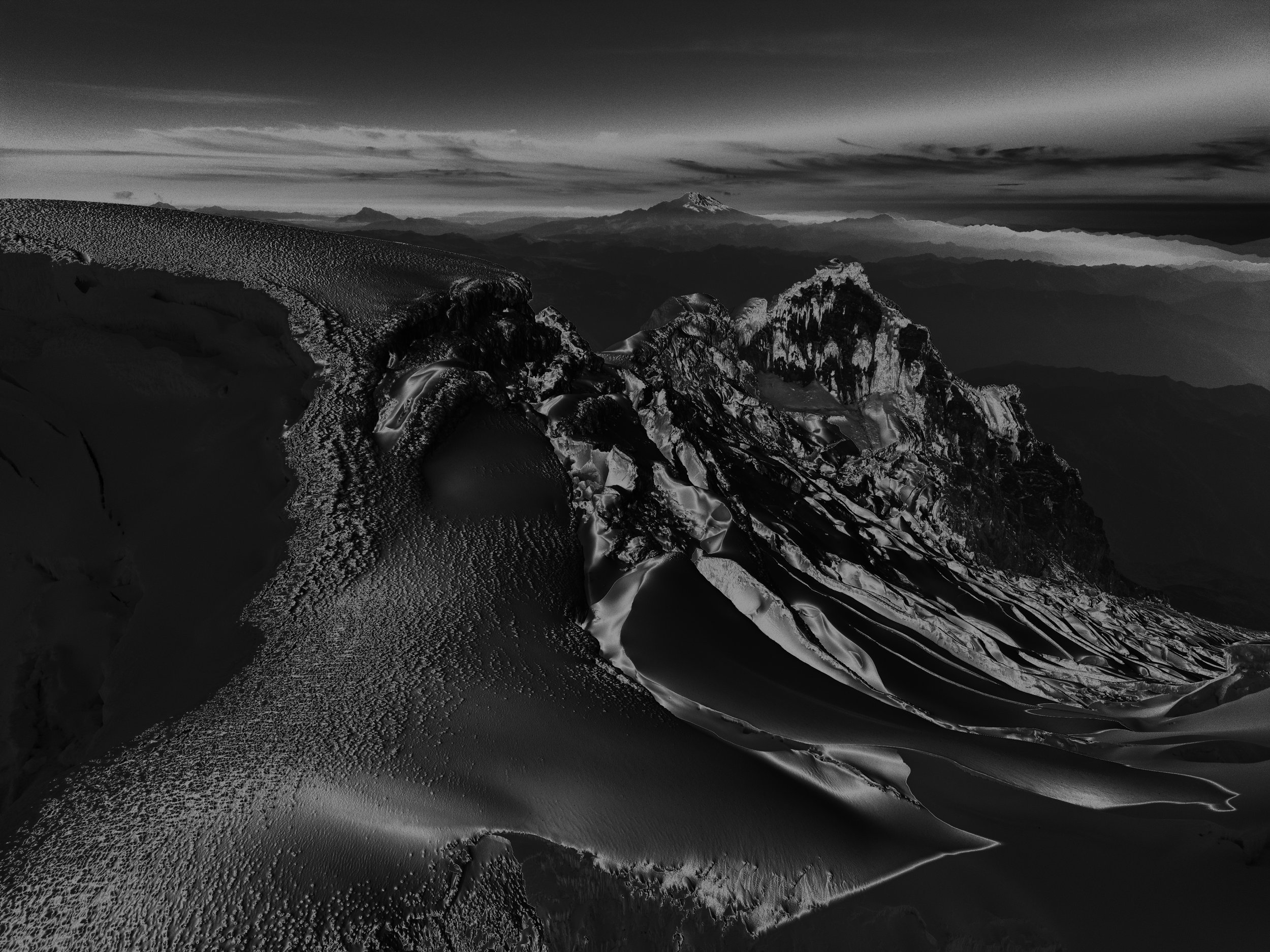
PERU


